The real cost of ground damage
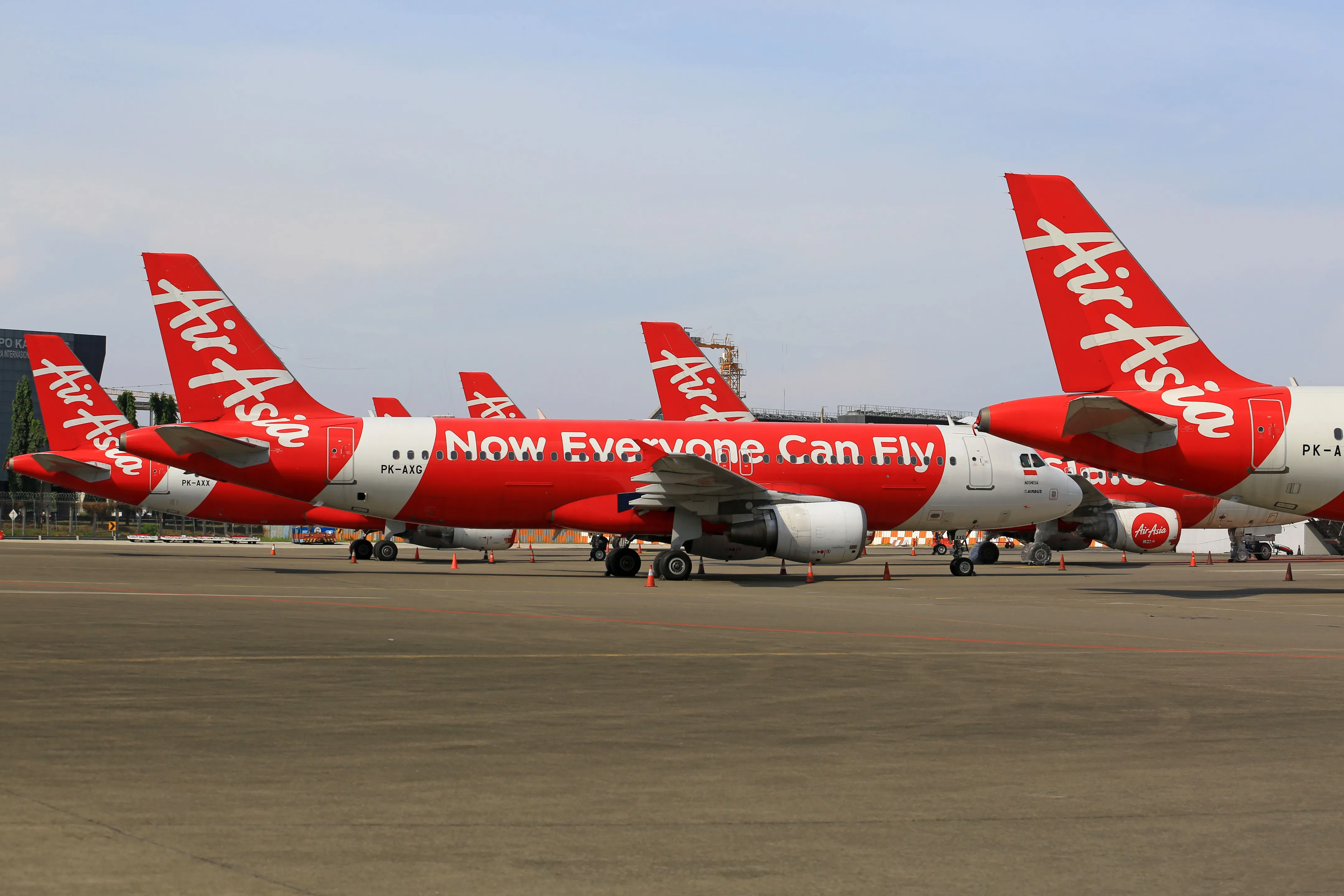
A scraped fuselage or a struck cargo door rarely costs only the repair. Add the delay, the knock-on rotations, sometimes an aircraft out of service — and a single avoidable contact on the ramp becomes one of the most expensive mistakes in the operation.
The industry-level number is stark. Ground damage costs aviation in the order of $5 billion a year, and 61% of it is caused by ground support equipment (GSE) — belt loaders, cargo loaders, pushback tractors, stairs, the everyday vehicles that surround an aircraft on every turnaround.
Ground damage costs the aviation industry around $5 billion per year. 61% is caused by GSE. Source: IATA — Ground Operations & Audits
What that figure hides is more useful than the figure itself: most of this damage is preventable, and most of it traces back to a moment of training. A driver misjudging a closing distance. A loader operator approaching a door at the wrong angle. A new agent who has never worked this stand, under this aircraft type, in this weather. None of these are exotic failures — they are ordinary gaps in familiarity, and familiarity is something you can build before the aircraft is there.
Why the ramp is the hardest classroom
The problem with training ramp agents is that the realistic environment is also the most expensive and most dangerous one. A live aircraft is, quite literally, the most costly classroom in aviation. You cannot let a trainee make a real mistake against a real fuselage to learn from it. So training compresses into whatever can be done safely: classroom theory, a walkaround, supervised time on the line when an aircraft and a trainer happen to be free at the same moment.
That scheduling constraint is the quiet killer. Taking a vehicle and a trainer off the line costs money every time, so realistic repetition is rationed — and the situations that cause damage are exactly the ones that are hard to rehearse: the unusual stand, the degraded-weather approach, the wide-body that only comes through twice a week.
Moving the mistake off the live ramp
This is the case for simulation, and specifically for simulation at true scale. If a ramp agent can meet the hard situations — and make the costly mistakes — in a faithful copy of their own airport first, the expensive version of that mistake never happens on the apron.
The word that matters is faithful. Generic e-learning or an approximate 3D environment teaches the idea of a procedure; it doesn't build the spatial judgement a driver actually uses. When every taxiway, stand, painted line and clearance is reproduced at true scale and true distance, what an agent learns in the simulator is what they do on the ramp — the same geometry, the same sightlines, the same approach to the same door.
What that changes in practice
- Repetition without cost. A new hire can run the same difficult approach twenty times without taking a vehicle off the line.
- Rare scenarios on demand. The wide-body, the snow, the night turnaround can be rehearsed before they ever happen for real.
- Evidence, not assumption. Every session becomes data — per-trainee competency you can actually point to, rather than a signature on an attendance sheet.
From cost centre to measurable competency
The $5B figure is usually read as a damage problem. It is at least as much a training problem — and that reframing is what makes it addressable. You cannot directly buy your way out of ground damage, but you can change the conditions that produce it: how familiar an agent is with the exact environment before they work it, and how clearly you can demonstrate that familiarity to an auditor, an airline customer, or yourself.
That is the shift worth making — treating ramp training not as a box to tick before someone is handed a tractor, but as the most direct lever you have on a multi-billion-dollar, largely preventable problem.
See it on your own airport
ARD rebuilds your apron at true scale and trains every GSE on it. A 30-minute walkthrough, set up around the airport and procedures you operate.